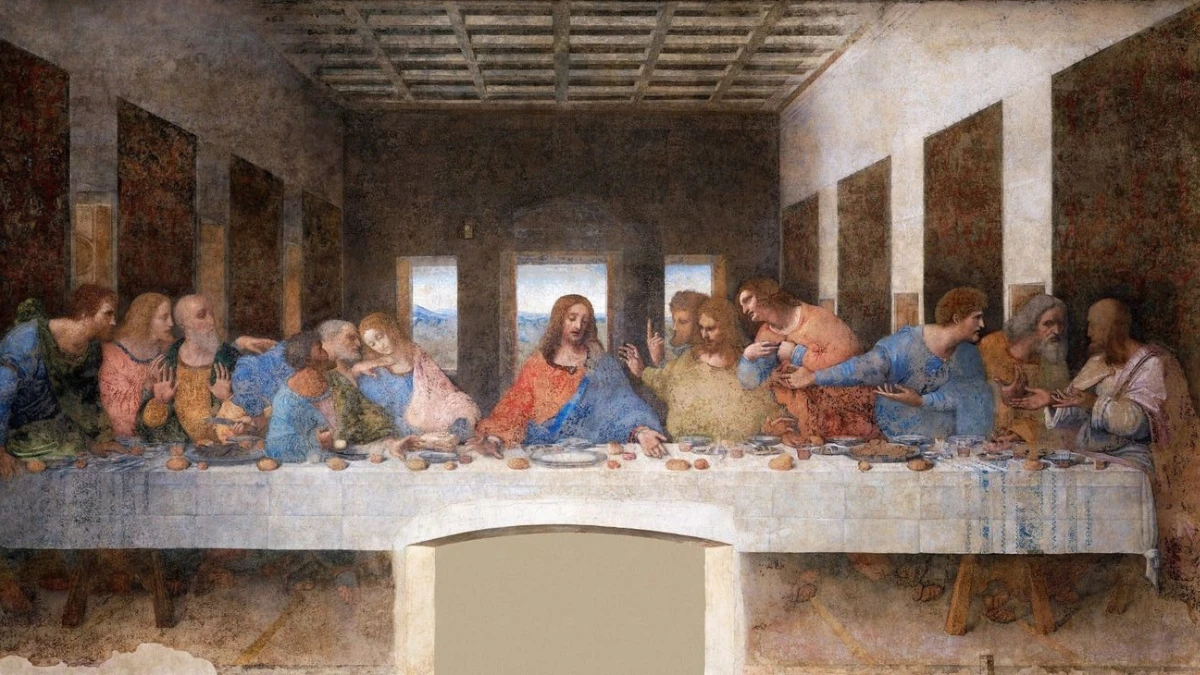
Leonardo da Vinci’s Last Supper was painted between 1495 and 1498 on the north wall of the refectory at Santa Maria delle Grazie, Milan. It depicts the moment Christ announces that one of his apostles will betray him. Painted in tempera and oil on dry plaster — not traditional fresco — it began deteriorating within decades. The most recent major restoration was completed in 1999 after 21 years of work. It measures 4.6 metres tall and 8.8 metres wide.
You get 15 minutes in front of it. Most people spend the first five recovering from the shock of its scale — reproductions convey nothing of the wall-filling presence of the original. The next ten minutes are where the painting either opens up or remains opaque, depending entirely on what you bring to it.
This guide covers the history, technique, symbolism, and what to look for in your 15-minute slot. For the symbols and hidden details specifically, see our dedicated Last Supper hidden details guide.
Top Tickets
# Last Supper Guided Tour
# Last Supper Semi-Private Tour
# Last Supper + Milan Guided Tour
Table of Contents
What the Painting Depicts
The Last Supper depicts the moment described in the Gospel of John (13:21) when Jesus, at supper with his twelve apostles, announces: ‘One of you will betray me.’ Every apostle reacts differently — with shock, disbelief, anger, denial, or guilt. Leonardo captures the psychological moment of revelation rather than any physical action, making each apostle’s response a study in human emotion.
The scene is set at a long table, Jesus at the centre, his arms outstretched on the table. The twelve apostles are arranged in four groups of three on either side. This grouping — four clusters of three — is generally read as a visual reference to the Trinity.
The apostles, from left to right: Bartholomew, James Minor, Andrew (hands raised), Judas (leaning forward, bag in hand), Peter (holding a knife), John (calm, to Jesus’s right), Jesus, Thomas (finger raised), James Major (arms spread), Philip (hand to chest), Matthew, Thaddeus, and Simon. Our hidden details guide covers each apostle’s identity and gesture.
The Setting: Why It’s in a Refectory
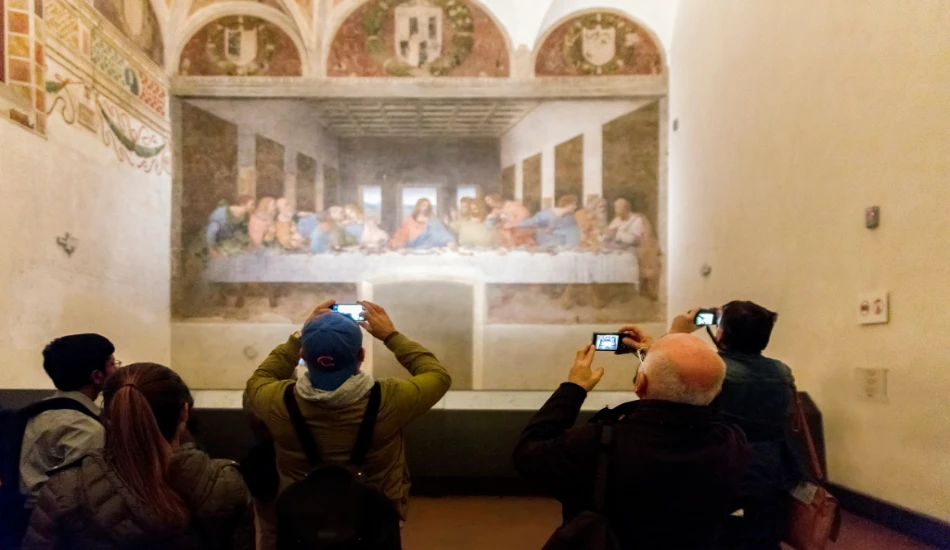
The painting was commissioned by Ludovico Sforza, Duke of Milan, and executed on the wall of the dining hall (refectory) of the Dominican convent adjoining the church of Santa Maria delle Grazie. The choice of subject — a scene of people at a table — for a room in which monks ate their daily meals was deliberate. The monks ate facing the painting, with The Last Supper as their perpetual dining companion.
This context matters physically: the painted room in the mural appears to extend the real refectory. Leonardo engineered the perspective so the ceiling, walls, and table projection align with the actual room. Standing at the original viewing distance (approximately 9 metres back), the scene reads as a continuation of the space you are standing in.
Book This TourThe Last Supper in movies, memes, and pop culture!
You’ve probably seen The Last Supper without even realizing it:
1. Centerpiece of The Da Vinci Code mystery
2. Parodied in The Simpsons, Family Guy, and modern art
3. Referenced in ads, fashion shoots, and music videos
4. Recreated in school plays and Instagram challenges
The Technique: Why It Began Deteriorating Immediately
Leonardo did not use buon fresco — the standard technique of painting on wet plaster, which bonds pigment into the wall as it dries. Instead, he used tempera and oil on dry plaster. This gave him the ability to work slowly, revise, and achieve the fine details and tonal gradations he wanted. The cost was adhesion: the paint began to flake off the dry plaster surface within 20 years of completion. By 1517, visitors were already noting its deterioration.
Traditional fresco required working fast — pigment had to be applied while the plaster was still wet, which set the colour permanently. Leonardo, notorious for his slow, perfectionist working method, could not work this way. He needed to be able to stop, reconsider, and adjust — to paint the way he drew. The dry plaster gave him that freedom. It also gave posterity a fragile, unstable surface that required ongoing intervention for 500 years.
The 1499 flood: The year after the painting was completed, the refectory flooded. This first environmental assault accelerated the deterioration that had already begun.
The 1652 door: In the 17th century, the refectory’s south wall was modified and a door was cut through — removing the feet of Jesus and the apostles at the bottom of the composition. The lower section of the painting was destroyed.
The 1796 stables: Napoleon’s troops used the refectory as stables and a hay store. The soldiers reportedly threw objects at the apostles’ faces.
The 1943 bomb: An Allied aerial raid destroyed most of the refectory. The wall bearing The Last Supper survived, protected by sandbags packed by museum staff. Photographs from 1943 show the painting on a standing wall surrounded by rubble.
The 1999 Restoration
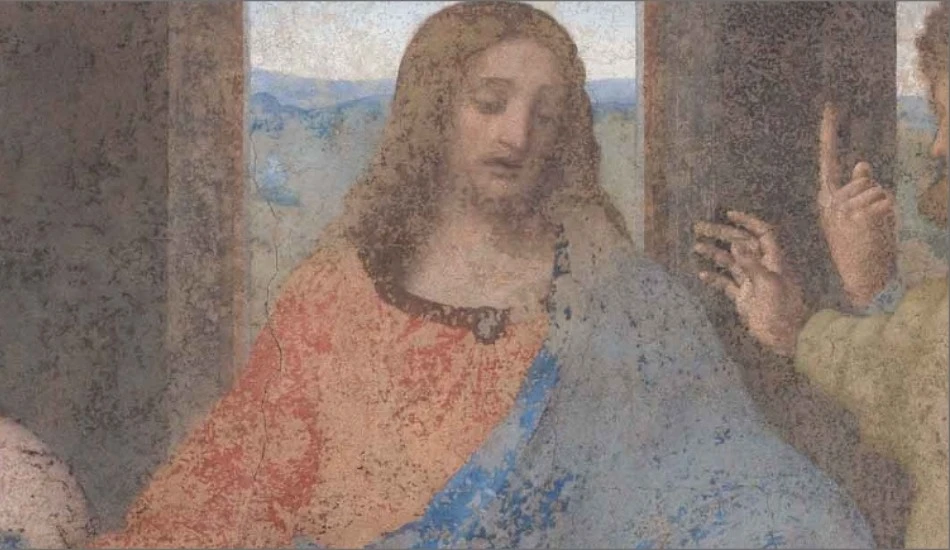
The most significant restoration of The Last Supper was carried out between 1978 and 1999 — 21 years of painstaking work. Restorers removed centuries of overpainting from earlier, misguided interventions, revealing more of Leonardo’s original work than had been visible for decades. The result is what visitors see today: not a pristine 15th-century painting, but the most accurate representation of Leonardo’s original intentions that modern restoration science can achieve.
Prior restorations — particularly those in the 18th century — had added significant overpainting, filling gaps and repainting lost sections in ways that obscured what remained of Leonardo’s original layers. The 1999 restoration removed these additions layer by layer, using microscopes, solvents, and extraordinary patience.
What was recovered: Leonardo’s original colour palette, which is lighter and cooler than the 18th-century overpainting suggested. Some faces, including Judas’s, recovered more detail. The architectural elements in the background became clearer.
What was not recovered: significant sections of the painting where Leonardo’s original pigment had simply gone. These areas remain blank or are indicated with minimal, unobtrusive fill.
Book This TourWhat to Look At in Your 15 Minutes
If you arrive without preparation, 15 minutes is not enough. If you arrive knowing what to look at, it is.
Here are the key focal points — or see our full hidden details guide for the complete breakdown:
- Scale: The painting is 4.6m tall and 8.8m wide. Stand back as far as the room allows before approaching. The first thing to absorb is the sheer physical presence.
- Judas: Third from the left, leaning backward from Jesus, his right elbow on the table, his hand knocking over a salt shaker. In his left hand, obscured, a small bag — the money for the betrayal. His face is in relative shadow.
- The opposite wall: Turn around. Montorfano’s Crucifixion (1495) is on the south wall. Almost every visitor misses it entirely.
- The perspective: Look at the ceiling, the tapestries on the walls, the table projection. They all converge at a vanishing point behind Jesus’s right temple.
- John: To Jesus’s right — the young, calm figure leaning slightly away. Often mistaken for a woman in Da Vinci Code speculation; he is the apostle John.
The Da Vinci Code: Clearing Up the Myths
Dan Brown’s 2003 novel The Da Vinci Code popularised the theory that the figure to Jesus’s right in The Last Supper is Mary Magdalene rather than the apostle John. No art historian, Leonardo scholar, or church historian supports this interpretation. Leonardo’s preparatory sketches for the composition identify the figure as John. The soft, feminine rendering of John is entirely consistent with Leonardo’s style of depicting young male figures throughout his career.
The figure to Jesus’s right is John the Apostle — the youngest of the twelve, traditionally depicted as beardless and gentle in Christian art. Leonardo’s rendering is consistent with this iconographic convention, not evidence of a secret identity.
Other Da Vinci Code claims — a ‘V’ shape between Jesus and the adjacent figure representing the feminine divine, a disembodied hand holding a knife — are likewise not supported by scholarly analysis. The knife belongs to Peter, visible at the wrist of his raised arm.
Where to buy Last Supper souvenirs and replicas?
Near the exit is a small gift shop with:
– Licensed reproductions and prints of The Last Supper
– Postcards, magnets, and art books
– Unique Italian gifts themed around Leonardo’s works
It’s one of the few official places in Italy where you can buy authentic merchandise.
Frequently Asked Questions
Is The Last Supper the original painting?
Yes. The painting on the refectory wall is the original mural painted by Leonardo between 1495 and 1498. It has been extensively restored but is not a copy. You are looking at the same surface that Leonardo painted.
Why is it called a mural and not a fresco?
Because Leonardo did not use the fresco technique. A fresco is painted on wet plaster. Leonardo painted on dry plaster using tempera and oil. The distinction matters because it explains why the painting has deteriorated far more than a true fresco would have.
How big is The Last Supper?
The painting measures 4.6 metres tall by 8.8 metres wide. It fills the entire north wall of the refectory. Nothing in reproductions prepares visitors for the scale.
Is Mary Magdalene in The Last Supper?
No. The figure to Jesus’s right is John the Apostle, the youngest of the twelve. Leonardo’s preparatory sketches identify this figure as John. The soft rendering is consistent with his depictions of young men throughout his work.